

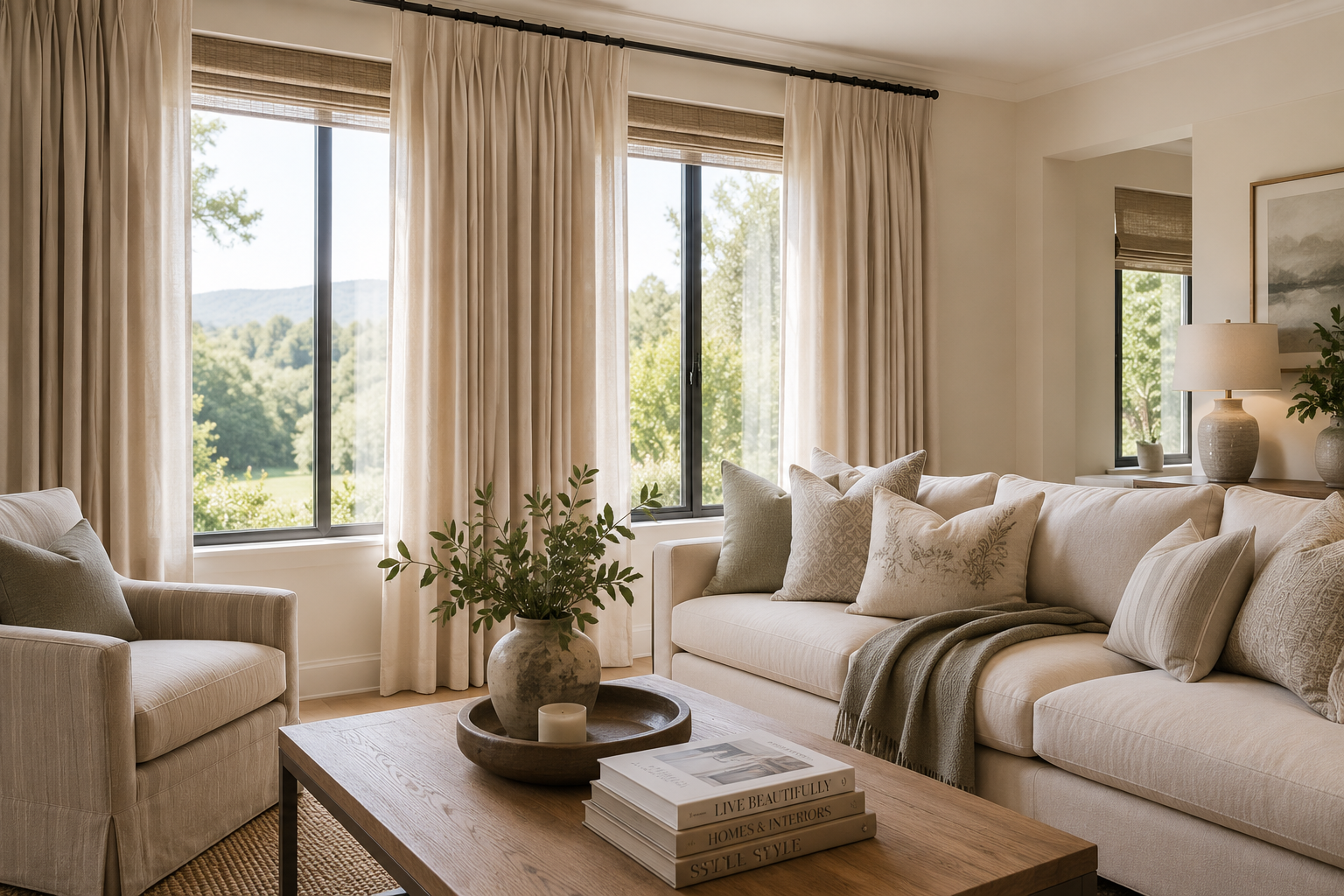
Curtains are one of the most powerful design decisions in a home. They soften a room, frame natural light, add warmth, create privacy, improve comfort and help pull an entire interior scheme together. Yet they are also one of the easiest elements to get wrong.
A beautiful sofa can still look unfinished if the curtains are too short. A carefully painted bedroom can feel cold if the fabric is too thin. A sunny living room can become uncomfortable if the window treatment does not manage glare. A formal space can lose its elegance if the curtain style does not match the architecture of the room.
At AWiiDA Interiors, curtains are not treated as an afterthought. They are part of the full interior story. AWiiDA specialises in the manufacturing of custom-made curtains, roman blinds and soft furnishings, while also supplying blinds, shutters, curtain tracks, rods, wallpaper, upholstery, décor, rugs and furniture under one roof. The company’s profile also confirms its long-standing history in interior décor, personal service, craftsmanship and custom soft furnishings.
“Curtains do not simply cover a window. They decide how a room wakes up in the morning and how it settles at night.”
That is why choosing curtains should never start with the colour only. It should start with the room, the window, the purpose and the feeling you want to create.
Start with the Room, Not the Fabric
The most common curtain mistake is choosing a fabric before understanding what the room needs. A curtain that works beautifully in a guest bedroom may not be suitable for a sunny lounge, a nursery, a bathroom-adjacent space or a formal dining room.
Before looking at samples, ask a few practical questions. Do you need privacy during the day? Do you need the room to be dark at night? Does the window receive harsh afternoon sun? Do you want the curtains to blend quietly into the space or become a feature? Is the room used daily, occasionally or commercially, such as in a guesthouse or office?
A bedroom usually needs softness, privacy and light control. A living room needs balance: enough filtered light during the day, enough texture to feel warm, and enough structure to frame the space. A dining room often needs elegance and proportion. A home office may need glare control without making the room feel heavy. A guesthouse room needs beauty, durability, easy maintenance and a finish that can withstand repeated use.
Curtains should answer the needs of the space before they answer the trend of the moment.
This is where custom curtains become valuable. Ready-made curtains can work in certain spaces, but they are limited by standard sizes, standard drops, standard heading styles and available colours. Stuart Graham, for example, lists ready-made curtain options in fixed sizes, heading types and fabric finishes, including lined, self-lined, eyelet and tape-heading options. These are useful references, but custom-made curtains allow the final treatment to be planned specifically for the window, wall height, fabric choice and room style.
Choose the Right Fabric Weight
Fabric weight affects how curtains hang, how they move and how formal or relaxed the room feels.
Lightweight fabrics, such as sheers or soft linen-look textures, create an airy, relaxed feeling. They are beautiful for living rooms, coastal-inspired spaces, sunrooms and layered window treatments. They allow light to filter into the room while softening the glare.
Medium-weight fabrics are often the most versatile. They offer enough body to hang well, enough texture to feel substantial, and enough softness to suit both bedrooms and living areas.
Heavier fabrics create drama, warmth and a more formal finish. They work well in bedrooms, formal lounges, dining rooms and spaces where the curtains need to feel luxurious. However, heavier fabrics need proper tracks, rods and installation support. A beautiful heavy curtain can quickly look wrong if the hardware is too weak or too narrow.
“The fabric is not only what you see. It is what gives the curtain its movement, weight and mood.”
For AWiiDA Interiors, this is an important area of expertise because the business gives clients access to a wide supplier network, including brands such as Hertex, Stuart Graham, Home Fabrics, ROMO, Design Team, ASH, Loomcraft and Svenmill. When a client views fabrics in a showroom, they can feel the weight, see the texture and understand how a fabric may behave once it is made into curtains.
Online inspiration is helpful, but fabric should ideally be touched, held and viewed in real light before a final decision is made.
Understand Lining Before You Choose the Look
Lining is one of the most important curtain decisions. It affects privacy, light control, insulation, fabric protection and the way the curtain hangs.
Unlined curtains are lighter and more relaxed. They can work well where privacy and light control are not the main concern. Sheers, for example, are often used unlined or layered with a second curtain or blind.
Standard lining gives curtains more body and improves the overall finish. It can help protect the face fabric from sunlight and gives the curtain a more polished appearance from both inside and outside the home.
Blockout lining is useful for bedrooms, nurseries, guest rooms and media rooms where light control matters. A total blockout fabric or coated lining can reduce light significantly and create a darker, more restful space. Stuart Graham’s curtain ranges include examples of total blockout and lined curtain options, showing how different curtain products are designed for different light-control needs.
Thermal lining or thicker layered treatments may help improve comfort around windows. The U.S. Department of Energy notes that window coverings can help regulate temperatures, reduce glare, provide privacy and improve comfort. It also notes that conventional draperies, when drawn during cold weather, can reduce heat loss from a warm room by up to 10%, depending on the treatment and how it is installed.
For South African homes, this matters in a practical way. Curtains can help soften rooms that receive strong sun, protect interiors from harsh glare and add comfort in cooler seasons. They are not a replacement for proper insulation, but they are part of how a home feels and functions.
Get the Length Right
Curtain length can make or break the room.
Too short, and the room feels unfinished. Too long in the wrong fabric, and the curtains may look untidy. Too narrow, and the window looks squeezed. Too high or too low, and the proportions of the wall can feel awkward.
For a polished look, curtains are often hung higher than the window frame to create the feeling of height. Floor-length curtains usually give a more elegant finish, especially in living rooms, bedrooms and dining areas. They help the wall feel taller and the room feel more complete.
There are generally three popular length choices. Curtains can just touch the floor for a clean tailored finish. They can break slightly on the floor for a softer look. Or they can puddle for a more romantic, decorative style. For most modern family homes, a clean floor-touching or slight-break finish is more practical.
The right length also depends on the room. A guesthouse room may need something neat and easy to maintain. A formal bedroom can carry more softness. A living room with children and pets may need a practical drop that looks beautiful without dragging.
“The most elegant curtain is not always the most dramatic one. It is the one that fits the room perfectly.”
This is one of the biggest reasons to invest in proper measuring and professional advice. A few centimetres can change the entire result.
Match the Heading Style to the Room
The heading is the top part of the curtain. It decides how the curtain gathers, folds and moves across the track or rod.
Eyelet curtains are common in ready-made options and can work in casual spaces, but they are not always the most refined choice for every room. Tape headings are flexible and widely used. Pleated headings create a more tailored, elegant look. Wave curtains offer a clean, modern rhythm with soft, even folds. Rod-pocket and tab-top curtains may suit relaxed spaces but are not always practical for windows that are opened and closed often.
Interior publications and design guides often point out that curtain style, header type, fabric and installation all influence whether curtains feel modern, casual, formal or dated. Livingetc, for example, highlights different curtain styles including pleated, eyelet, wave, rod-pocket, café and sheer options, each serving a different function and aesthetic.
For AWiiDA’s market, the heading style should be chosen according to the home, not simply the trend. A soft wave heading may suit a modern coastal interior. A pleated heading may suit a more classic home. A simple tape heading may work beautifully in a family room or guest bedroom. Roman blinds may be better than curtains in kitchens, bathrooms or compact spaces.
The best curtain heading is the one that works with the fabric, the track or rod, and the architecture of the room.
Think About Fullness
Fullness refers to how much fabric is used across the width of the window. This is one of the hidden details that makes curtains look either luxurious or flat.
A curtain with too little fullness can look stretched and thin, even if the fabric itself is expensive. A curtain with enough fullness forms generous folds and looks considered. The right fullness depends on the fabric, heading style and desired look.
Sheers often need more fullness to look soft and flowing. Heavier fabrics may need less fullness because the weight naturally creates body. Patterned fabrics need careful planning so that the design is not lost in the folds or mismatched across the window.
This is where custom manufacturing adds real value. It allows the curtain to be calculated properly instead of relying on a standard panel that may not suit the window width.
Choose Colour with the Whole Room in Mind
Curtain colour should not be chosen in isolation. It must work with the wall colour, flooring, furniture, rugs, bedding, upholstery and natural light.
Neutral curtains are timeless because they blend easily into many interiors. Cream, stone, linen, sand, taupe, warm grey and soft blue-green tones can create a calm, elegant look. These colours also work well with AWiiDA’s clean, beachy design direction and the soft blue-green tone of the brand identity.
A darker curtain can make a room feel grounded and dramatic. This can work beautifully in bedrooms, formal dining rooms or moody lounges. However, dark curtains can visually reduce light and may dominate a small space.
Patterned curtains can become a feature, especially in a simple room. They work well when the rest of the interior is restrained. A patterned fabric can bring in personality, colour and softness, but it must be balanced carefully with scatter cushions, rugs and upholstery.
When in doubt, bring the room together through texture rather than strong colour. A textured neutral curtain often gives more long-term flexibility than a bold trend colour.
Do Not Forget the Track, Rod and Installation
Curtains are only as good as the system holding them.
A poor-quality rod, badly placed track or weak bracket can ruin the final look. The track or rod must suit the curtain weight, heading style, wall structure and how often the curtains will be used.
Tracks create a clean, practical finish and work beautifully for ceiling-mounted or wall-mounted curtains. Rods can be decorative and suit certain interiors, especially where the hardware is part of the design. Motorised curtain tracks may be useful for large windows, high windows, luxury bedrooms, hospitality spaces or homes where convenience is a priority.
AWiiDA’s documentation confirms that the business supplies high-quality curtain tracks, rods and accessories, as well as motorised blinds and curtain tracks, with installation support. This matters because a curtain project is not complete when the fabric is chosen. It is complete when the curtain hangs correctly, opens smoothly and looks balanced in the room.
Professional installation also helps prevent common mistakes, such as tracks being installed too low, rods being too narrow, brackets not being strong enough, or curtains not stacking properly when open.
Consider Layering Curtains with Blinds
Curtains do not always need to work alone. Some of the most beautiful and practical rooms use layered window treatments.
A sheer curtain can soften the light during the day, while a lined curtain provides privacy at night. A roman blind can work with side curtains for a tailored look. A roller blind can provide practical sun control behind a decorative curtain. Shutters can be paired with soft curtains for a classic, layered effect.
Layering works especially well in bedrooms and living rooms. It gives more control over privacy, light and atmosphere. It also adds depth to the interior, which makes a room feel more designed and less flat.
Because AWiiDA offers custom curtains, roman blinds, blinds, shutters and installation, the team can help clients choose a layered solution rather than forcing one product to solve every problem.
When Are Custom-Made Curtains Worth It?
Custom-made curtains are worth considering when the window is unusually sized, when the room needs a polished finish, when the client wants a specific fabric, when the drop needs to be exact, or when the curtains are part of a larger interior scheme.
They are also worth it when the room is important: a main bedroom, lounge, dining room, guesthouse suite, reception area or formal living space.
Ready-made curtains can be useful for quick solutions and standard windows. They are available in fixed sizes and styles, and some ranges offer lined, blockout or sheer options. Stuart Graham notes that the public can access its fabric, wallpaper and ready-made curtain collections through retailers, decorators and stockists, while trade buyers can order through accounts.
But custom curtains give the client more control. The fabric, lining, fullness, heading, length, hardware and installation can all be planned together. The result feels more intentional.
“A custom curtain is not only made for a window. It is made for the way the room is lived in.”
That is the difference between simply covering glass and completing a space.
The Final Checklist Before Choosing Curtains
Before ordering curtains, take time to check the full picture. What does the room need in terms of light, privacy and comfort? What feeling should the curtains create? Will the fabric hang well? Does the colour work with the furniture and flooring? Is lining needed? Should the curtain be paired with a blind? Will the track or rod support the weight? Who will measure and install it?
These questions prevent costly mistakes.
A curtain that looks beautiful in a small fabric sample may behave differently when made into a full drop. A colour that looks perfect in showroom lighting may change in afternoon sun. A fabric that suits a bedroom may not be practical for a busy family lounge. A standard length may fall awkwardly in a room with high ceilings.
This is why a consultation is often the best starting point. AWiiDA Interiors can look at the room, understand the practical requirements and guide the client through fabric, lining, heading, hardware and installation options.
Give Your Windows the Finish They Deserve
Curtains have the power to change how a room feels immediately. They can make a bedroom more restful, a lounge more inviting, a dining room more elegant and a guesthouse room more complete. They can soften hard finishes, add warmth to neutral spaces, frame beautiful views and create privacy without losing style.
The best curtains are not chosen quickly. They are planned carefully.
At AWiiDA Interiors, the process brings together design advice, custom manufacturing, supplier access and professional installation. With decades of experience, personal service and a showroom based in Kimberley, AWiiDA helps clients make curtain choices that are practical, beautiful and tailored to the space.
Whether you are furnishing a new home, refreshing one room, upgrading a guesthouse or replacing outdated window treatments, custom curtains are one of the most effective ways to give your interior a finished, considered and timeless look.
Call to Action
Visit AWiiDA Interiors in Kimberley to view curtain fabrics, discuss custom-made curtains and find the right window treatment for your home, office or guest space.
AWiiDA Interiors — all your interior needs under one roof.