

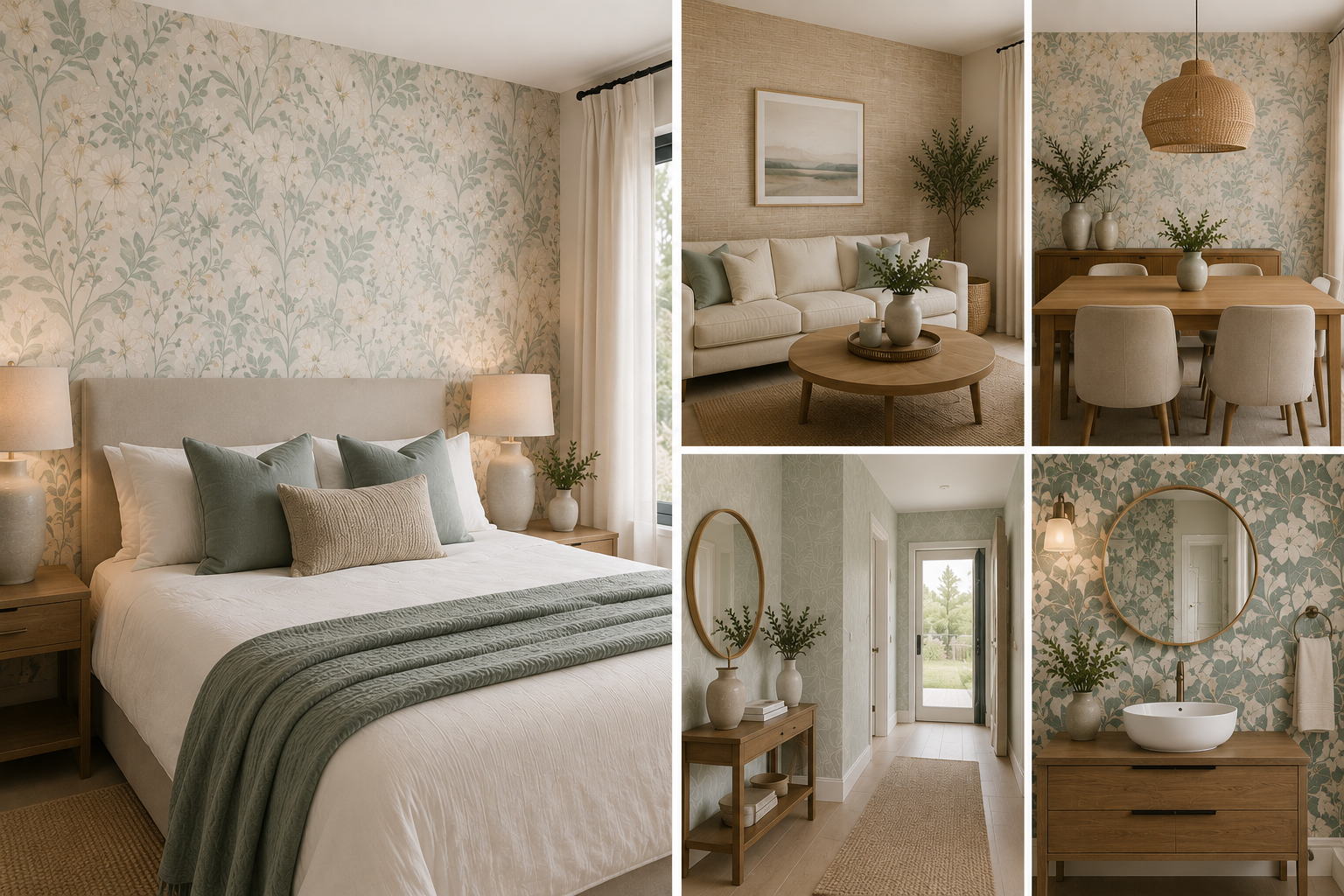
Wallpaper has returned as one of the most exciting ways to transform a room — and not in the old-fashioned way many people remember. Today’s wallpaper is elegant, expressive, textured, practical and deeply personal. It can soften a bedroom, create a dramatic dining room, bring character to a hallway, add warmth to a guesthouse suite, or turn a plain wall into the feature that finally makes the room feel complete.
A wall is not just a wall. It is one of the largest surfaces in a room. When it is ignored, the space can feel flat. When it is treated beautifully, the whole room changes.
At AWiiDA Interiors, wallpaper fits perfectly into the brand’s “all your interior needs under one roof” approach. The company’s own documentation confirms that AWiiDA supplies wallpaper, offers professional wallpaper installation, and also supports clients with curtains, roman blinds, blinds, shutters, upholstery, rugs, home décor, furniture and project management.
“Wallpaper does not only decorate a room. It gives the room a voice.”
That is why wallpaper is one of the most valuable tools in a room refresh. You do not need to knock down walls, replace every piece of furniture or start again. Sometimes one beautifully chosen wallcovering can give your space a completely new identity.
Why Wallpaper Works So Well
Wallpaper adds something paint often cannot: pattern, movement, depth and tactile character.
Paint is beautiful when colour is the main goal. Wallpaper goes further. It can create the feeling of linen, grasscloth, plaster, silk, botanical illustration, mural art, woven texture, hand-painted detail or architectural rhythm. It can make a room feel calm, luxurious, playful, warm, romantic, formal or relaxed.
Wallpaper also helps define a space. In open-plan homes, it can visually separate a dining corner or reading area. In bedrooms, it can anchor the bed. In guest bathrooms, it can create a boutique-style moment. In entrance halls, it can set the tone before visitors see the rest of the home.
Interior trend reporting continues to show that wallpaper is no longer limited to small patterns or traditional rooms. Good Housekeeping’s 2026 wallpaper trend coverage notes that designers are using wallpaper more boldly, with colour, pattern, luxury textures and even unexpected placements such as ceilings becoming part of the modern wallpaper conversation.
The important part is not to follow a trend blindly. The right wallpaper must still suit the home, the furniture, the light, the lifestyle and the mood of the room.
Start With the Feeling You Want
Before choosing wallpaper, decide how the room should feel.
A bedroom may need calm. A dining room may need warmth. A guest bathroom may need personality. A lounge may need softness. A hallway may need interest. A child’s room may need imagination. A guesthouse suite may need a memorable finish that still feels comfortable.
If the room must feel restful, look at soft neutrals, washed botanicals, linen textures, gentle stripes or misty coastal colours. If the room needs energy, consider bolder pattern, richer colour or a mural-style wall. If the room feels cold, textured wallpaper can add warmth. If the space feels plain, a botanical or scenic wallpaper can introduce movement without needing more furniture.
“The best wallpaper does not shout for attention. It helps the room become what it was meant to be.”
This is where AWiiDA’s consultation approach becomes important. Wallpaper should not be chosen separately from curtains, rugs, upholstery, bedding, furniture or décor. It should be part of the full room story.
Feature Walls: The Safest Way to Make a Big Impact
A feature wall is often the easiest way to use wallpaper successfully.
Instead of wallpapering the entire room, one carefully chosen wall becomes the focus. This works especially well behind a bed, behind a dining table, around a fireplace, at the end of a hallway, behind open shelving, or in a guest bathroom.
A bedroom feature wall can make the bed feel anchored and luxurious. A dining room feature wall can create a warm backdrop for gatherings. A lounge feature wall can add interest without overwhelming the room. In a guesthouse, a wallpapered headboard wall can make each room feel more polished and memorable.
The secret is choosing the correct wall. The best feature wall is usually the wall your eye naturally lands on when you enter the room. It should not fight with too many windows, doors or busy furniture pieces. It should support the room’s focal point.
For a clean, beachy AWiiDA-inspired look, a feature wall could use soft blue-green, sand, warm white, taupe, stone, linen, olive or misty botanical tones. This keeps the room calm while still giving it character.
Textured Wallpaper: When You Want Luxury Without Loud Pattern
Textured wallpaper is ideal for clients who want a refined look but do not want bold prints.
Grasscloth, linen-look, woven, plaster-effect, embossed and vinyl textures can add depth without making the room feel busy. They are especially beautiful in bedrooms, dining rooms, lounges, entrance halls and office spaces.
Textured wallpaper is powerful because it changes as the light changes. Morning light may reveal subtle fibre. Evening lamps may bring out warmth. A plain wall suddenly feels layered.
This is particularly useful in neutral interiors. A cream room with cream furniture can feel flat if everything is smooth. Add textured wallpaper, linen curtains, a woven rug and soft cushions, and the room becomes rich without becoming colourful.
A.S. Création, a major wallpaper manufacturer, describes its mission around bringing walls to life and notes that it began in 1974, later growing into one of Western Europe’s leading wallpaper manufacturers with thousands of products and distribution across many countries. This shows how wallpaper has developed far beyond simple decorative paper; today it is a full design category with a wide range of surfaces, textures and styles.
Botanical Wallpaper: Bring Nature Indoors
Botanical wallpaper remains popular because it brings life into a room without needing dramatic colour.
Leaves, branches, grasses, florals, vines and garden-inspired prints work especially well in South African homes where indoor-outdoor living, natural light and warm climates influence interior style. Botanical wallpaper can feel fresh, soft and timeless when chosen carefully.
For a coastal or relaxed interior, choose gentle botanical prints in muted greens, pale blues, soft beige or linen tones. For a more dramatic look, choose deeper greens, large-scale leaves or layered floral designs. For a heritage-inspired interior, look at archival florals or classic garden scenes.
Sanderson’s official wallpaper collection highlights the brand’s heritage design approach, including trailing florals, archival block-printing techniques, toiles, stripes and garden scenes, with wallpapers exploring texture, tone and composition. That style of design is useful inspiration for clients who want wallpaper that feels graceful rather than trendy.
Botanical wallpaper works particularly well when it is echoed elsewhere in the room: a green scatter cushion, a soft linen curtain, a woven rug, a timber table, a ceramic vase or a leafy plant. The room should feel connected, not themed.
Murals: When One Wall Becomes the Artwork
Wallpaper murals are ideal when you want a room to feel special.
A mural can look like a landscape, an abstract artwork, a botanical illustration, a coastal scene, a soft watercolour, a forest, a garden, a mountain view or a textured panel. Instead of hanging art on the wall, the wall becomes the art.
Murals are especially effective in bedrooms, entrance halls, dining rooms, reception areas, restaurants, guesthouses and statement lounges. They are also useful when a room lacks architecture. A plain box-shaped room can gain depth and atmosphere through one mural wall.
Eijffinger describes “wallpowers” as digitally printed murals available in many variations, including children’s rooms, photo murals, weathered walls and Pip Studio options. The brand also positions itself as a wallpaper and fabric brand with more than 140 years of design history, built around colour, creativity and innovation.
Murals must be chosen carefully. A small room can carry a mural, but the scale must be right. A very busy mural may overpower a room with heavy furniture. A soft mural can create calm. A large botanical or landscape mural can make a wall feel expansive.
“A mural is not a background. It is the room’s main conversation.”
Wallpaper in Bedrooms
Bedrooms are one of the best places to use wallpaper.
A wallpapered wall behind the bed creates an instant headboard effect, even if the actual headboard is simple. It adds softness and makes the bed feel grounded. In guest rooms, wallpaper can create a boutique feeling without needing expensive furniture.
For main bedrooms, consider restful patterns: soft florals, linen textures, botanical prints, pale murals, gentle stripes or warm neutrals. For children’s rooms, wallpaper can be more playful, but it should still have longevity. A design that is too babyish may need replacing quickly. A soft animal, botanical, mural or pattern-based wallpaper can grow with the child more easily.
Wallpaper also pairs beautifully with curtains. If the wallpaper is patterned, the curtains can be textured but calmer. If the wallpaper is textured and plain, curtains can carry more pattern. AWiiDA is well positioned to help with this balance because its services include wallpaper, custom curtains, roman blinds and soft furnishings.
A bedroom should never feel visually noisy. The goal is comfort. Wallpaper should make the room feel more restful, not more cluttered.
Wallpaper in Living Rooms
In a living room, wallpaper can solve several problems.
If the room feels unfinished, wallpaper can add a focal point. If the room feels cold, textured wallpaper can bring warmth. If the furniture is neutral, a soft pattern can add interest. If the room has too many plain walls, wallpaper can create depth.
For AWiiDA’s beachy and clean design direction, a living room wallpaper should usually be soft, layered and elegant. Think of washed botanical prints, grasscloth textures, pale blue-green details, warm sand tones or subtle geometric patterns. The wallpaper should work with the curtains, rug, upholstery and furniture.
A living room is also a public space, so the wallpaper must be something the client can live with daily. Very bold wallpaper can look exciting at first, but it may become tiring if the rest of the room is not balanced. If the client loves bold wallpaper, use it with calmer furniture and simple curtains.
The goal is not to make the wallpaper compete. It should support the whole room.
Wallpaper in Dining Rooms
Dining rooms can often carry stronger wallpaper than bedrooms or lounges.
Because dining rooms are used for gathering, entertaining and atmosphere, they can handle richer textures, deeper tones, dramatic botanicals, murals or elegant patterns. Wallpaper can make a dining room feel warmer and more finished, especially when paired with curtains, upholstered chairs, a large rug and soft lighting.
A dining room wallpaper does not have to be loud. A textured wallpaper behind a sideboard can be just as effective as a bold print. A mural can create a beautiful restaurant-like feeling. A subtle metallic or woven finish can catch evening light and make the room feel more special.
“Dining room wallpaper should do what good hosting does: make people want to stay a little longer.”
This is where professional guidance can prevent costly mistakes. The wallpaper should suit the table, chairs, lighting and artwork. It should be viewed under both daylight and evening light before the final decision is made.
Wallpaper in Guest Bathrooms and Small Spaces
Small rooms are often the best places to be brave.
A guest bathroom, powder room, passage, entrance niche or reading corner can handle wallpaper beautifully because the space is contained. A bold wallpaper in a small guest bathroom can feel charming rather than overwhelming. A hallway wallpaper can make the home feel more considered. A wallpapered niche can create a little design moment.
The mistake is assuming small spaces must always be plain. Sometimes a small space becomes more interesting when it has pattern or texture.
However, practical considerations matter. Bathrooms and humid spaces need suitable products and correct installation. Not every wallpaper belongs in every space. Ventilation, splash zones and surface preparation all matter.
This is why professional wallpaper installation is important. AWiiDA’s documents specifically mention wallpaper and professional installation of wallpaper as part of its offering.
Colour: Choose From the Room, Not From the Roll
Wallpaper colour should be chosen from the room as a whole.
Look at the floor, sofa, curtains, bedding, furniture, existing paint colour, lighting and artwork. A wallpaper sample may look beautiful on its own, but it must work with everything else in the space.
Eijffinger notes on its website that colours shown online can differ from the actual product colour because screen settings and display types affect how colours are perceived. This is a very important point for clients. Wallpaper should ideally be viewed in person, in the room, at different times of day.
For a calm AWiiDA-style palette, soft blue-greens, warm whites, sand, taupe, stone, olive, muted cream and natural textures will work well. For a more expressive room, richer greens, deep blues, terracotta, charcoal or patterned florals can be introduced, but they should still relate to the furniture and soft furnishings.
Wallpaper is not just colour. It is colour, texture, scale, repeat and finish.
Scale and Pattern: Why Size Matters
Pattern scale is one of the biggest wallpaper decisions.
Large-scale patterns can make a room feel bold, elegant and dramatic. They work well on feature walls, large rooms and spaces with simple furniture. Small-scale patterns can feel softer and more detailed, but they can also become busy if used across too many walls. Stripes can create height or width depending on direction. Geometric patterns can add structure. Botanicals can soften a room. Murals can create depth.
If the room already has patterned curtains, rugs or upholstery, the wallpaper should be chosen carefully. Patterns can mix beautifully, but they need a shared colour story or scale relationship. Harlequin’s official site describes one of its fabric and wallpaper ranges as demonstrating colour, harmonious palettes and joyful pattern mixing, which reflects how modern interiors can combine designs when there is a clear visual logic.
Pattern mixing is not random. It is planned. The wallpaper, curtains, scatter cushions, rug and upholstery should feel like they belong in the same conversation.
Why Installation Matters
Wallpaper is not forgiving when badly installed.
Uneven walls, poor surface preparation, mismatched patterns, visible seams, bubbles, lifting edges and incorrect adhesive can ruin even an expensive wallpaper. Pattern matching is especially important with florals, stripes, geometrics and murals. A design that is a few millimetres off can be visible across a full wall.
Professional installation protects the investment. It also helps clients avoid ordering too little wallpaper, selecting the wrong product for the surface, or applying wallpaper in unsuitable conditions.
This is especially important for premium wallpaper brands and imported collections. A beautiful wallcovering deserves proper preparation and installation.
AWiiDA’s role is not only to help a client choose a wallpaper. It is to help the wallpaper become part of a finished room through the correct product, placement, installation and styling.
How to Use Wallpaper Without Overdoing It
Wallpaper should add interest, not confusion.
If the room is already full of strong colours, heavy furniture and busy décor, choose a calmer wallpaper. If the room is very plain, wallpaper can carry more personality. If the room is small, decide whether you want quiet texture or a bold jewel-box effect. If the wallpaper is dramatic, keep some surrounding elements simple.
A good rule is to let one element lead. If the wallpaper is the hero, the curtains can be calmer. If the curtains are patterned, the wallpaper can be textured. If the rug is bold, the wallpaper can be softer. If the room is minimal, wallpaper can add the layer that makes it feel complete.
“A well-chosen wallpaper should feel discovered, not forced.”
This is why AWiiDA’s “under one roof” model is valuable. Clients can look at wallpaper together with fabric, curtains, upholstery, rugs and décor instead of making separate decisions that may not work together.
Final Thoughts
Wallpaper is one of the most effective ways to transform a room without a full renovation.
It can add warmth, texture, depth, personality and style. It can make a bedroom feel softer, a dining room feel richer, a guest bathroom feel memorable and a living room feel complete. It can support a calm coastal look, a classic botanical scheme, a boutique guesthouse feeling or a bold feature moment.
The best wallpaper is chosen with intention. It considers the room, the light, the furniture, the curtains, the scale, the texture and the way the space is used.
At AWiiDA Interiors, clients can explore wallpaper as part of a complete interior solution — from consultation and product selection to professional installation and final styling. With custom curtains, roman blinds, blinds, shutters, upholstery, rugs, furniture and décor available through one experienced team, wallpaper becomes more than a wall covering. It becomes part of a beautifully finished space.
Visit AWiiDA Interiors in Kimberley to view wallpaper options, discuss feature wall ideas and arrange professional wallpaper installation for your home, office or guest space.